


You have no items to compare.


Social Media



MassageTableRentals.com
Vitrectomy Recovery: The Complete Guide to Face-Down Positioning and Recovery Equipment
Posted on April 25, 2026 by Allison There have been 0 comments
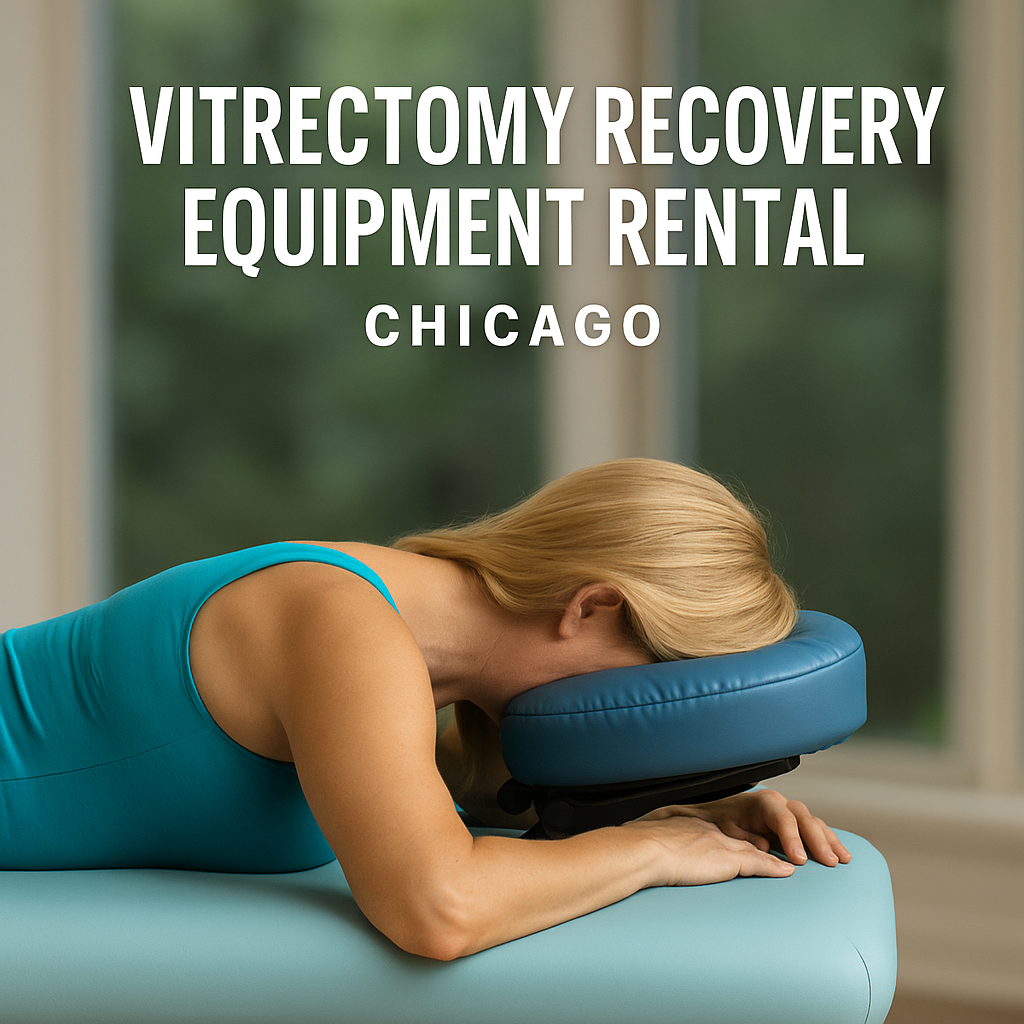
Vitrectomy recovery is one of the most physically demanding parts of eye surgery — not because of pain, but because of positioning. Depending on your procedure, your surgeon may require you to maintain a face-down position for up to 23 hours a day for one to three weeks. Without the right equipment, this is nearly impossible to sustain comfortably.
MassageTableRentals.com has been supplying vitrectomy recovery equipment to patients nationwide for nearly 20 years, shipping from two US warehouses to all 50 states and Puerto Rico.
Jump to: What Is Vitrectomy Recovery? | How Long Does Face-Down Positioning Last? | What Equipment Do You Need? | Recovery Package Options | Does Insurance Cover It? | Tips for Managing Positioning
What Is Vitrectomy Recovery?
A vitrectomy is a surgical procedure in which the vitreous gel inside the eye is removed and replaced with a gas bubble. The gas bubble acts as a tamponade, pressing against the retina to hold it in place while it heals. For the bubble to work correctly, it must float to the right position inside the eye — and that means your head must be positioned face-down.
The face-down requirement varies by procedure. Surgeries for macular holes, retinal detachments, and certain vitreoretinal conditions each carry different positioning requirements. Your surgeon will tell you exactly how many hours per day you need to maintain face-down positioning and for how long.
How Long Does Face-Down Positioning Last?
Most patients are required to maintain face-down positioning for one to two weeks, though some procedures require up to three weeks. The positioning requirement is typically most strict in the first five to seven days, when the gas bubble is largest and most active.
Your surgeon's instructions are the definitive guide — follow them exactly. The positioning requirement is not optional. Studies consistently show that patients who maintain proper positioning have significantly better outcomes.
What Equipment Do You Need for Vitrectomy Recovery?
Managing face-down positioning around the clock — day and night — requires equipment designed specifically for this purpose. Standard pillows and furniture cannot provide the support needed for extended face-down rest without causing neck, shoulder, and back strain.
Face-Down Sleep System
An orthopedic sleep system allows you to rest face-down in bed at night without straining your neck or cutting off circulation. The bodyCushion system included in our rental packages is the only face-down recovery system with published EMG research showing significantly lower muscle tension than lying on a flat surface.
Vitrectomy Recovery Chair
A seated support chair allows you to maintain face-down positioning during the day while reading, eating, watching television, or using a device. The Oakworks Seated Support Chair is the professional standard — lightweight at 15 lbs, fully adjustable, and designed specifically for extended face-down daytime positioning.
Desktop Face-Down Unit
A desktop unit provides a stable face-down surface for working on a laptop, tablet, or reading material while seated at a table.
Two-Way Mirror
A two-way mirror allows you to watch television or interact with others while face-down without straining your neck.
Mattress Slide Unit
A mattress slide unit provides a stable face-down surface when lying in bed, supporting the upper body during extended positioning.
Recovery Package Options
- Basic Package (2 pieces): Sleep system and seated support chair — covers night rest and daytime seated positioning. View Basic Package →
- Comfort Package (3 pieces): Adds the desktop unit for working or reading face-down at a table. View Comfort Package →
- Ultimate Package (4 pieces): All four pieces — the most complete face-down recovery solution available. View Ultimate Package →
All packages ship via free FedEx Ground and arrive 1–2 days before your surgery date. Free prepaid return labels included.
See all vitrectomy recovery packages with full pricing, comparisons, and equipment details →
Does Insurance Cover Vitrectomy Recovery Equipment?
Many health insurance plans, FSA accounts, and HSA accounts cover vitrectomy recovery equipment rental as durable medical equipment. Coverage varies by plan. We provide insurance reimbursement forms with every rental — available for immediate download from your account — to support your claim submission.
Tips for Managing Face-Down Positioning
- Set a timer to remind yourself to return to positioning after bathroom breaks or meals.
- Use the mirror attachment on your recovery chair to watch television — it removes the temptation to raise your head.
- Have a caregiver help you reposition at night if needed.
- Contact your surgeon immediately if you experience increasing pain, vision changes, or are unable to maintain positioning.
Medical disclaimer: This content is informational only and does not constitute medical advice. Always follow your surgeon's specific instructions for positioning requirements and duration.
Rent vitrectomy recovery equipment — ships nationwide, arrives before surgery →
This post was posted in Eye Surgery Recovery
Click the tags to see more posts like this.
Midwest Warehouse:
5024 Chase Ave, Downers Grove, IL 60515

West Coast Warehouse:
3655 E Patrick Lane Suite 400, Las Vegas, NV 89120 US
Billing: PO Box 9186, Naperville, IL 60567-0186
Telephone: (800) 687-5199
